Asia · Independently researched guide
Minakami outdoor guide
A rail-accessible Japanese mountain and hot-spring base for spring snowmelt rafting, canyoning, hiking and winter skiing.
Quick answer
What is Minakami best for?
Minakami is best for rafting, canyoning, skiing, hiking, hot springs. The most useful areas to research first are Tone River, Suwakyo and local canyons, Tanigawadake, Minakami ski areas.
Conditions at a glance
Weather, elevation and waves
Planning context is separated from live conditions so the numbers are useful without pretending to be a forecast.
Typical weather
11–20°C
Across the months listed in this guide, 2021–2025 daily averages were about 11–20°C, with 161 mm of precipitation in an average listed month.
Base elevation
372 m
372 m at the city-base model grid point. Route and summit elevations can be substantially different.
Waves, rivers or route terrain
2 named rafting sections
This guide identifies 2 commercial whitewater sections: Tone River spring section, Tone River summer section. Spring snowmelt produces the strongest rafting, with more moderate trips continuing into summer depending on flow. Current flow, releases and operator decisions still control whether trips run.
Interactive month planner
How conditions change through the year
Select a month to compare typical air temperature, precipitation, base elevation context and the broad commercial rafting window.
Typical weather
Choose a month
Base elevation
372 m
River planning
Choose a month
View the complete 12-month dataset
| Month | Typical low–high | Average precipitation | Broad river-season fit |
|---|---|---|---|
| January | -4–5°C | 60 mm | Inside broad commercial river window |
| February | -3–6°C | 81 mm | Inside broad commercial river window |
| March | 1–11°C | 112 mm | Outside broad preferred window |
| April | 7–17°C | 118 mm | Inside broad commercial river window |
| May | 11–21°C | 168 mm | Inside broad commercial river window |
| June | 16–25°C | 199 mm | Inside broad commercial river window |
| July | 21–29°C | 232 mm | Inside broad commercial river window |
| August | 22–30°C | 220 mm | Inside broad commercial river window |
| September | 19–26°C | 207 mm | Inside broad commercial river window |
| October | 11–20°C | 103 mm | Outside broad preferred window |
| November | 4–14°C | 73 mm | Outside broad preferred window |
| December | -1–8°C | 79 mm | Outside broad preferred window |
Historical monthly averages describe seasonal potential, not the conditions on a specific travel day. The river window is editorial planning context, not a flow gauge; current water level, releases, hazards and operator status still need to be checked.
Cost and connectivity
What housing and remote work may cost
The cost bars preserve the practical comparison from the original guide. Internet figures now use area-level fixed-network observations instead of an unsupported property-speed claim.
Monthly planning model
US$2,350 total
Broad editorial planning estimate. It is not a live quote and does not include flights, visas, insurance or major equipment purchases.
Area fixed-network signal · 2026 Q1
251.8 Mbps download
Test-weighted Ookla map-tile average within approximately 10 km of the destination coordinates. This describes the surrounding fixed network—not the Wi-Fi quality of a particular room or coworking space.
Nightly accommodation planning ranges
Compare stay types
Private rental
US$66–103/nightHotel room
US$123–174/nightHostel dorm
US$26–43/nightThese are expanded planning ranges from Nuevo Adventure's existing lodging model, not scraped Airbnb or live hotel inventory. Season, taxes, room type, location and booking lead time can materially change the total. Verify against live dates before booking.
Area-by-area guide
Best outdoor areas and route options
These are distinct areas, not interchangeable recommendations. Read the suitability note for each and verify current conditions before committing.
Rafting
Tone River
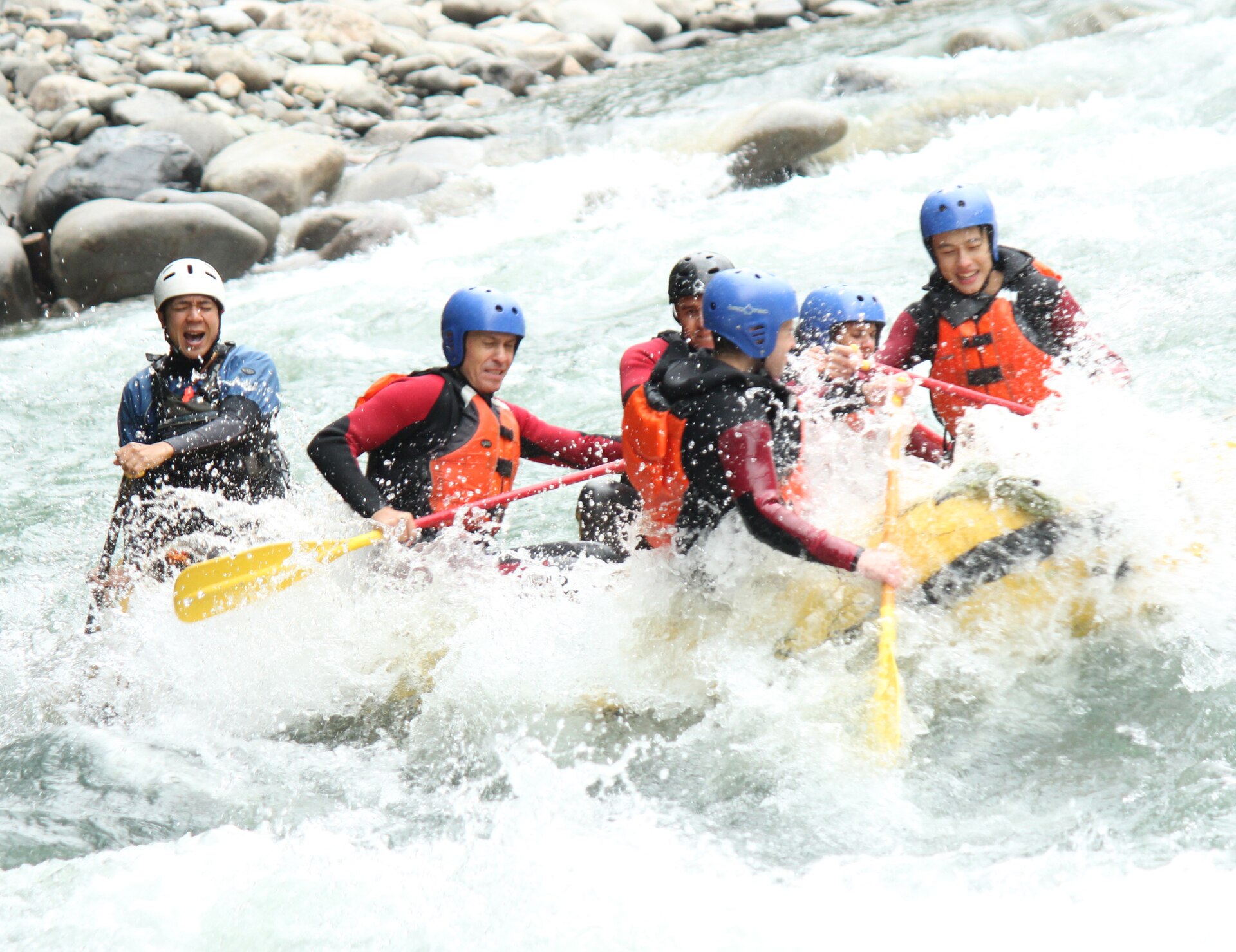
Spring snowmelt can produce Class IV whitewater, while summer trips generally use different or more moderate reaches.
Locate this areaCanyoning
Suwakyo and local canyons
Guided waterfall and gorge routes depend on flow, water temperature and operator assessment.
Locate this areaHiking and mountaineering
Tanigawadake
A serious mountain environment with rapid weather change and routes extending well beyond ropeway sightseeing.
Locate this areaSkiing
Minakami ski areas
Resorts and backcountry zones have distinct avalanche and access requirements.
Locate this areaIs it your kind of trip?
Would you enjoy using Minakami as your base?
Minakami makes the most sense when rafting and canyoning are the reason you are coming. Here is what tends to feel great, what can become frustrating, and what everyday logistics are actually like.
rafting and canyoning are why you are here
A rail-accessible Japanese mountain and hot-spring base for spring snowmelt rafting, canyoning, hiking and winter skiing. Tone River is a logical first area to research; it is not a promise of beginner terrain, so confirm the exact route or session locally.
You want every day to be predictable
The clearest example is Tone River: Spring snowmelt can produce Class IV whitewater, while summer trips generally use different or more moderate reaches. That does not make the trip a bad idea; it means spring water is cold and powerful. Use established operators, check canyon closures, and separate lift-served winter terrain from uncontrolled backcountry.
Expect transfers and a few early starts
Minakami and Jōmō-Kōgen provide rail access; individual onsen districts are dispersed, so verify shuttle timing and property connectivity. Day to day, you will be relying on Train, local bus & operator transfer. Check the first and last connection before committing to an early start.
August; heat, sun and afternoon weather may change start times.
January; pack for inactive periods and higher terrain, not only the town forecast.
July; precipitation can affect trails, access roads, river flow and visibility differently.
April, May, June, July, August, September, January, February. This combines several sports, so choose the month in the planner for activity-specific context.
Whitewater guide
Named rafting sections around Minakami
Spring snowmelt produces the strongest rafting, with more moderate trips continuing into summer depending on flow.
Tone · Snowmelt rafting
Tone River spring section
Cold spring flow creates the most powerful commercial trips; exact reach and grade depend on water level.
Locate this river sectionTone · Commercial rafting
Tone River summer section
Lower summer water often changes the route and intensity; confirm trip length and minimum age.
Locate this river sectionNot a live river gauge: rapid grades are broad commercial classifications and can change with flow, releases, hazards and the reach an operator selects. Confirm the current section, minimum age, swim requirement, equipment, guide credentials and cancellation threshold before booking.
Picture the stay
What 3 days, 1 week or a month in Minakami could look like
Minakami is really two different trips: a snow-season base and a summer mountain base. Choose that version first, then check lift, hut, road and guide schedules for the exact week. Think of these as useful shapes for a trip, not reservations you have to force when conditions change.
A simple first visit
- Meet the outfitter before treating the advertised river season as a guarantee. Ask which section is running, what the current commercial grade feels like, and whether Tone River matches everyone in the group.
- Put the main river day on the operator's best flow and weather window. If Suwakyo and local canyons is a separate section or activity, do not assume the same equipment, skill level or transfer plan applies.
- Keep the final day for Tanigawadake and Minakami ski areas, recovery, or the plan displaced by weather. A flexible third day is usually more valuable than a third prepaid commitment.
Let the conditions choose the order
Minakami and Jōmō-Kōgen provide rail access; individual onsen districts are dispersed, so verify shuttle timing and property connectivity. Spend the week between Tone River, Suwakyo and local canyons, Tanigawadake, and Minakami ski areas, but keep one recovery or work day and one weather-flex day. Minakami is really two different trips: a snow-season base and a summer mountain base. Choose that version first, then check lift, hut, road and guide schedules for the exact week.
Build a routine before filling the calendar
A month gives you time to repeat rafting without chasing conditions every day. Minakami and Jōmō-Kōgen provide rail access; individual onsen districts are dispersed, so verify shuttle timing and property connectivity. Use the first week to test the trip to your priority area, gear storage, mobile backup and early-start transport. A broad working range is US$1,900–$2,950 before flights, insurance and major gear.
Remote-work reality
Where to base yourself
Minakami and Jōmō-Kōgen provide rail access; individual onsen districts are dispersed, so verify shuttle timing and property connectivity.
We do not label a destination's Wi-Fi as “tested” without property-level evidence. Ask a host for a recent speed test, confirm mobile coverage and keep a backup connection.
Safety and access
What can change the plan
Spring water is cold and powerful. Use established operators, check canyon closures, and separate lift-served winter terrain from uncontrolled backcountry.
Forecasts, permits, closures and operator standards change. This guide is planning context, not a substitute for current official advice or professional instruction.
Before paying an operator
What to verify before booking in Minakami
Send the operator the names Tone River, Suwakyo and local canyons, Tanigawadake, Minakami ski areas and ask which one the booking actually uses. A product title can describe a region without guaranteeing the route, break, river section or launch you expect.
Rafting, paddling and canyon water
- Get the exact river reach, current commercial grade and the flow or release threshold used to operate.
- Confirm minimum age, swim requirement, guide-to-guest ratio, PFD, helmet and thermal protection.
- Ask how rescue cover, evacuation and weather cancellation work before transport begins.
Hiking and mountain routes
- Match the exact route, elevation gain, surface and turnaround time to the slowest person.
- Check permits, closures, water availability, daylight and the current local forecast.
- Download an offline route and identify who coordinates rescue; phone signal is not an emergency plan.
Snow and alpine terrain
- Check lift, road and hut operating dates separately from broad “ski season” marketing.
- Use the current avalanche bulletin and route-specific hazard advice; a resort forecast is not a backcountry assessment.
- Confirm guide scope, transceiver/shovel/probe provision and rescue insurance for the exact terrain.
Useful proof to keep: the exact meeting point, inclusions, participant requirements, operator reply, cancellation terms and emergency contact. Recheck conditions close to departure.
Map location
Where Minakami sits
Minakami, Japan · 36.6787, 138.9990. Use the map as orientation, then open the named activity areas above for route-specific planning.
Optional external content
Load the interactive map
OpenStreetMap receives technical connection data, such as your IP address, only after you choose to load this map.
Gear for the trip
Top gear picks for Minakami
We favor proven models from established outdoor brands, plus practical accessories that earn their place in your bag. These picks match the activities and conditions you’re likely to encounter in Minakami; check sizing and any route-specific technical requirements before you buy.
Paid links. As an Amazon Associate I earn from qualifying purchases. Nuevo Adventure selects the products; Amazon supplies current listing details and does not determine the editorial picks. Availability, sizing and shipping vary. For safety equipment, verify applicable standards and professional fit.
NRS H2Core Silkweight paddling shirt
Why this pick: A paddling-specific technical top from an established river-equipment brand, chosen for quick drying, sun coverage and unrestricted movement around spray.
Why in Minakami: Handles spray, sun and repeated movement better than an ordinary cotton layer. This aligns with planning around Tone River.
See this pick on AmazonSea to Summit Big River dry bag
Why this pick: A durable roll-top bag with abrasion-resistant fabric and dependable construction for keeping insulation, electronics and documents isolated from spray.
Why in Minakami: Keeps a phone, insulation and travel documents separated from spray and wet gear. This aligns with planning around Tone River.
See this pick on AmazonSmartwool merino performance base layer
Why this pick: A premium merino-based layer chosen for moisture management, odor resistance and comfort across active climbs, cold lifts and indoor transitions.
Why in Minakami: Manages temperature swings between active laps, lifts and cold starts. This aligns with planning around Minakami ski areas.
See this pick on AmazonAnker 10,000mAh 30W USB-C power bank
Why this pick: A compact, reputable 30W battery with enough capacity for navigation-heavy days while remaining well below common airline watt-hour limits.
Why in Minakami: Keeps navigation and communication available on longer days around Minakami; confirm current airline battery limits before flying.
See this pick on AmazonBefore you go
Finish the practical trip setup
Use the destination guidance above first, then compare the partner terms that apply to your dates and activities.
Commission disclosure: Nuevo Adventure may earn a commission if you book or buy through these links, at no extra cost to you. Partner payments do not change the editorial guidance on this page.
Direct answers
Minakami outdoor travel questions
What is Minakami best for outdoors?
Minakami is strongest for rafting, canyoning, skiing, hiking, hot springs. A rail-accessible Japanese mountain and hot-spring base for spring snowmelt rafting, canyoning, hiking and winter skiing.
What are the best outdoor areas around Minakami?
Start with Tone River, Suwakyo and local canyons, Tanigawadake, Minakami ski areas. Spring snowmelt can produce Class IV whitewater, while summer trips generally use different or more moderate reaches.
Is Minakami suitable for beginners?
Some guided or lower-commitment options may suit beginners, but the best-known terrain is not automatically beginner-friendly. Choose a qualified local provider and confirm current conditions.
When should I visit Minakami for outdoor activities?
The broad planning window in this guide is April, May, June, July, August, September, January, February. That combines the destination's main activities; the ideal month for one sport may be poor for another, so check the activity-specific forecast and operating calendar.
Can I work remotely from Minakami?
Minakami and Jōmō-Kōgen provide rail access; individual onsen districts are dispersed, so verify shuttle timing and property connectivity. Connection speed varies by building and provider, so request a recent speed test and confirm backup power or mobile coverage before booking a work-critical stay.
What weather and elevation should I plan for in Minakami?
Across the months listed in this guide, 2021–2025 daily averages were about 11–20°C, with 161 mm of precipitation in an average listed month. The base elevation is 372 m at the city-base model grid point. Route and summit elevations can be substantially different.
What rafting grades and season should I expect around Minakami?
Spring snowmelt produces the strongest rafting, with more moderate trips continuing into summer depending on flow. The named sections in this guide use broad commercial classifications from Tone River spring section (Up to Class IV by flow), Tone River summer section (Generally more moderate, flow dependent). Grades and availability change with flow, releases, hazards and operator choice, so confirm current conditions with a qualified local outfitter.
Provenance
Sources and image license
- Location and map reference: OpenStreetMap contributors.
- Destination identity: Q1345518 on Wikidata and Minakami, Gunma on Wikipedia. These identity links disambiguate the place; they are not used as evidence for current conditions.
- Recent weather averages and model base elevation: Open-Meteo Historical Weather API, using daily data from 2021–2025. These are planning averages, not a live forecast.
- Area fixed-network download, upload and latency observations: Speedtest by Ookla Global Fixed and Mobile Network Performance Maps, 2026 Q1. Nuevo Adventure calculated a test-weighted average from map tiles within approximately 10 km of the destination coordinates; this is not a property Wi-Fi guarantee.
- Speedtest by Ookla Global Fixed and Mobile Network Performance Maps was accessed on 4 August 2026 from https://registry.opendata.aws/speedtest-global-performance/. Based on analysis by Ookla of Speedtest Intelligence data for 2026 Q1. Provided by Ookla and accessed 4 August 2026. Ookla trademarks used under license and reprinted with permission.
- Destination and activity guidance: Minakami official outdoor guide. Route status, permits and operating information can change.
- Destination and activity guidance: JNTO: Minakami Onsen. Route status, permits and operating information can change.
- Rafting season and river-section reference: destination or official tourism source. Grades, releases and operating schedules must be checked for the travel date.
- Bookable activity details, review totals, prices and availability links are supplied by Viator's partner catalog and can change after publication. Nuevo Adventure may earn a commission from qualifying bookings.
- Hero image: Kamimoku International Village, licensed under CC BY-SA 3.0. The local copy was resized and compressed for web delivery; its license and credit travel with the record.
- Editorial review date: . Conditions and prices should be rechecked before travel.
Compare