
Start with the hat you already own. Put it on with your sunglasses, sit against a headrest and walk outside. Does the brim stay out of your eyes? Are your ears and neck shaded? Can you secure it without giving yourself a pressure headache? Those answers matter more than a safari label.
If it already gives useful coverage, fits comfortably and can travel without damage, you may not need a new one. Replace a poor fit or damaged fabric; do not replace a working hat merely to match the landscape. A baseball cap can be handy in a seat, but it leaves the ears and neck exposed and is not our default for an exposed dune walk.
Choose the hours you need to improve
For walking in open sun, prioritize coverage you will keep in place. A broad brim or neck cape is more useful than a high fabric rating on a design that leaves skin uncovered. ARPANSA notes that adult brims around 7.5cm or wider shade more facial areas than baseball caps. That is guidance about shape, not a guarantee of shade at every sun angle. ARPANSA's hat guidance.
For vehicle-heavy days, try the back of the hat against a seat. A rear brim that hits the headrest can push the front over your eyes. A soft cape or cap can avoid that particular problem, but a cap needs a separate ears-and-neck protection plan for stops. Try your camera or binoculars too: if lifting them catches the brim, you will keep taking the hat off.
For the coast and open vehicles, check adjustment and retention. A chin cord is useful, not a certified wind-speed rating. Secure loose gear before moving and follow the operator's instructions. If the hat becomes a distraction, stow it safely and use another appropriate protection arrangement; do not keep tightening an uncomfortable fit.
Five hats, with different reasons to choose them
For a walking-led trip, start with the Ultra Adventure's fixed cape or the Sunbriolet's all-around brim. Prefer a removable cape for moving between a seat and a walk? Compare the Sun Runner. The Tilley is a more expensive traditional-brim alternative, while the Swift is a limited-coverage cap—not a substitute for a full sun-protection setup.
Paid links. As an Amazon Associate I earn from qualifying purchases. Amazon does not choose these recommendations.
Exact Amazon US listing identities and photos checked 23 October 2026. Title and photo checks do not prove continuing stock, seller authorization, price, size availability or delivery eligibility. Confirm the model, size, seller, return terms and arrival date before ordering. US listings do not establish Namibian stock or delivery. Photos need only consent; analytics and advertising may stay off.
Trip filters are editorial starting points, not claims that other hats cannot be used there or that any hat passed a wind test. Circumference uses only the exact linked size; the Tilley's unverified numeric range is excluded when a measurement is selected. A chart match is not a comfort guarantee. Use the table for fractional measurements without rounding into a range. Prices are current manufacturer model references, not live Amazon offers or promises about any seller's stock.
Compare what is actually verified
All weights below are manufacturer model references, not our measurements or a total luggage allowance. A blank specification is not a zero. The maker's current model price is useful for comparing spending levels, but does not identify the revision, condition or offer you will receive from an Amazon seller.
Pack and clean the design you bought
Ultra Adventure: use the intended split-brim fold. The maker specifies a cold hand wash, line drying and no bleach, iron or dry cleaning. Sunbriolet: the selected listing calls for cold hand washing and line drying in shade; we have not verified a crush-proof or fold-flat claim, so protect the brim in luggage.
Tilley: preserve its brim shape. The LTM6 page describes cold hand washing or a delicate machine cycle with mild detergent, removing the foam and wind cord and reshaping to air-dry; check the received care label too. Swift: protect the stiff curved brim; the selected listing says machine wash, but check the received label before choosing a cycle. Sun Runner: the selected listing specifies hand washing; keep the removable cape with the cap when packing so you do not arrive with only half of your coverage plan.
Measure your head, then test the whole setup
Use a flexible tape where the hat will sit, following the particular maker's sizing instructions. Measure with the hairstyle you expect to wear. Compare the exact linked size—not the model's full size range. A men's, women's or unisex label does not establish a comfortable circumference or crown shape.
The filter is a shortlist tool, not an instruction to round your measurement into a size. Use the table and maker chart for fractional measurements and between-size advice. A range match can still pinch at the temples, sit too low over your eyes or leave a loose crown. The selected Amazon listing is only one size; other sizes must be checked separately before buying.
Wear it long enough indoors to notice pressure. Add sunglasses, turn your head, look down, sit against a headrest and raise your camera or binoculars. Check that you can operate the toggle or buckle comfortably. For a neck cape, see whether it still covers the back of your neck when you turn or look down; folding it away changes the coverage you bought it for.
Try it with your intended layers, but do not squeeze a thick winter hat underneath unless that combination genuinely fits. For a cold early drive, a separate warm layer may be more useful. Helmets and operator equipment rules take priority during activities that require them; none of these hats is protective headgear.
Pack for Namibia's contrasts, not a permanent heatwave
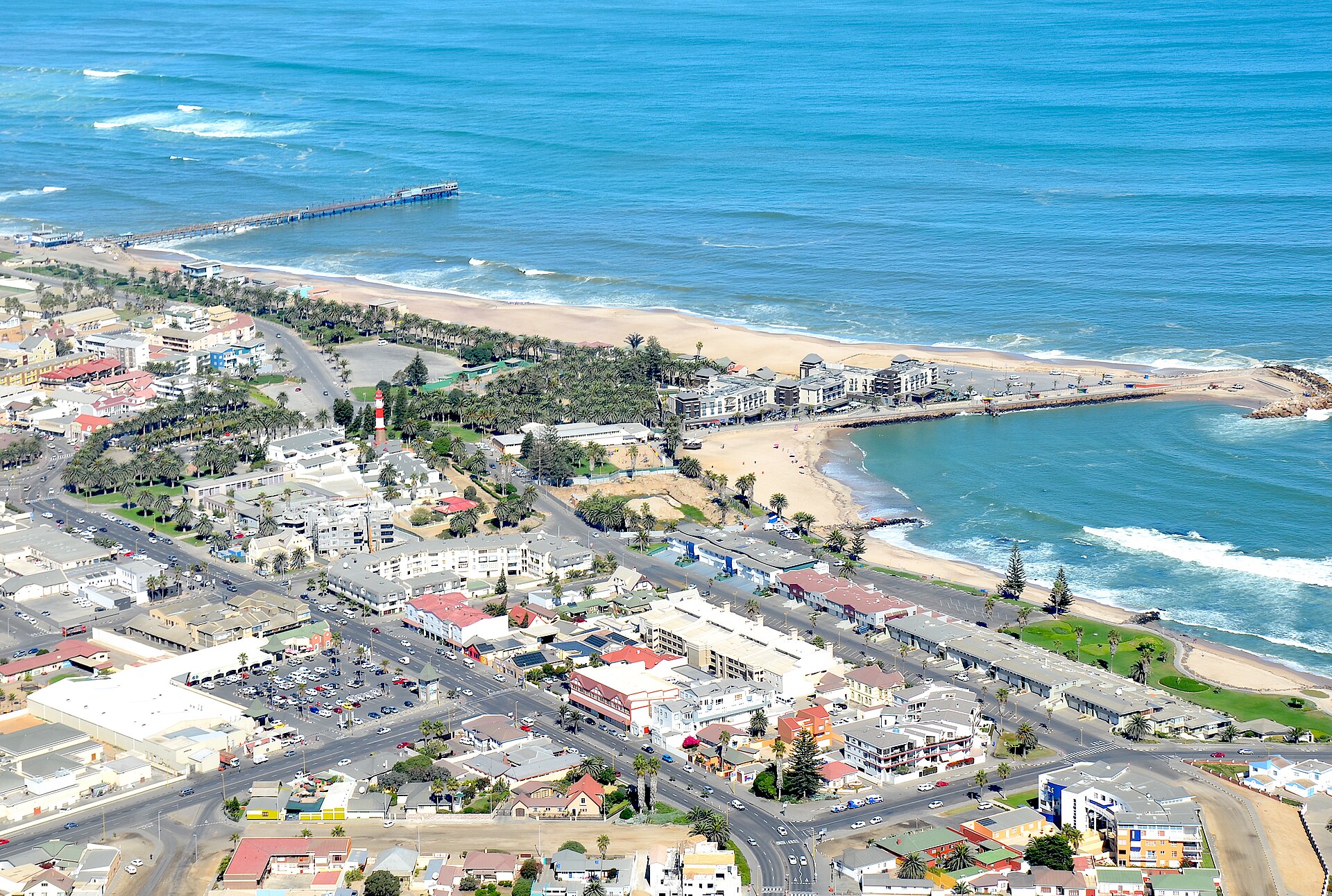
Namibia's tourism board describes hot inland summers from October to April, cold winter nights and a cooler coast with frequent fog. For a trip combining dunes and Swakopmund, pack a warm layer as well as sun coverage. A ventilated hat is not insulation, and a cool sea breeze is not evidence of low UV exposure. Check the forecast and UV information for your actual stops. Namibia climate context · WHO UV guidance.
Plan walking times, shade breaks and water separately from this purchase. No hat makes an excessively hot outing safe or prevents heat illness on its own. Combine it with suitable clothing, sunglasses, shade and sunscreen on exposed skin. A UPF label describes rated material, not a whole-face protection score; check whether mesh sections are included instead of assuming every vent is equivalent.
Ask your accommodation or guide about the current access window and conditions for your dune visit; do not build a sunrise plan around an unverified gate time. For Sesriem arrangements, start with Namibia Wildlife Resorts. On wildlife drives, follow park rules and stay in permitted areas. Never get out at an undesignated stop to retrieve a hat: the ministry specifically warns against leaving vehicles where it is not allowed. Official park-rules reminder.
Your binoculars need to work with the brim you choose. Our binocular buying guide explains eye fit and carrying tradeoffs; its Costa Rica itinerary advice is not Namibia access guidance.
The questions to settle before checkout
Does UPF 50+ mean my face gets the same protection?
No. Fabric rating and shade geometry answer different questions. A cap may have highly rated fabric while leaving the ears and neck bare. Sun angle, reflected light and a lifted brim or cape affect what is shaded. Use a hat as one part of your protection plan, not permission to extend exposure indefinitely.
Is a more expensive safari hat worth it?
Pay for a fit, brim structure, retention system or packing method that solves a problem you actually have. A premium traditional brim can be appealing for years of mixed travel, but may be less convenient against a headrest than a simpler soft cape. If two hats fit and cover you equally well, there is no need to pay extra for the look.
Can I fold it into a daypack or wash it in a hotel sink?
Follow the exact model's instructions. A designed folding crease is not permission to crush any brim anywhere, and a packable crown does not prove the brim tolerates a tight roll. Keep a structured hat on top of luggage or support its shape. Let damp fabric dry before packing it away; avoid a hot dryer unless the care label explicitly permits it. The model-specific care notes above take precedence over a generic travel trick.
Should I order another size or buy after arrival?
Order early enough for a return or exchange, and check the policy before wearing it outside or washing it. We verify only the linked size and color, not every option shown after you click. An Amazon US link does not prove Namibian stock, delivery eligibility or arrival before your flight. If you need a different size, check its model, chart and seller independently; do not buy the wrong size because this shortlist has a link.
How these choices were made
These are editorial judgments from manufacturer specifications, exact Amazon US listing identities and photographs, published reviews and the practical needs of the trip. We have not worn these hats on a Namibia expedition or measured their cooling, wind retention or UV performance. Published model weights are not our packed-kit measurements. Review observations helped identify questions worth testing yourself; they do not establish a universal fit or a defect rate for the exact linked generation.
Product sources are linked beside each choice. Destination and protection sources are linked where their guidance is used. Learn more about our research method and editorial policy.