
For a lodge-based Nepal trek, our first choice to consider is the GRAYL GeoPress if you want one bottle-shaped device that also addresses viruses. Choose the smaller UltraPress if pocket fit matters more than water per refill. If you already know and like a Sawyer Squeeze, you may not need to replace it: build a filter-then-disinfect routine and budget for the disinfectant, its waiting time and a separate clean-water bottle.
That distinction matters more than a few grams. The CDC's Nepal guidance does not consider tap water safe to drink. An attractive stream or a reassuringly clear glass is not evidence that viruses are absent. Our three lightweight microfilters below remove bacteria and protozoa according to their manufacturers, but they do not remove viruses. They are components of a kit, not like-for-like replacements for the three purifiers.
Do you need to buy anything?
Ask your trekking operator what water treatment is actually provided, how you will refill between stops and what happens if that supply fails. An existing clean bottle, a dependable treated-water arrangement and a suitable backup may be enough for a short supported trip. Do not buy a pump just because the itinerary contains a high pass.
Keep a filter you already own only if you know its condition, its maintenance history and whether it has frozen after use. Add the missing virus-treatment step instead of assuming a familiar brand covers everything. A borrowed unit with an unknown cartridge history is not the same bargain as borrowing a daypack. Practice the entire process at home, including the backup.
Find a kit you will use correctly at every stop
These are editorial starting points, not route clearance or health guarantees. “Small-kit trek” emphasizes carrying convenience; it does not relax treatment requirements. Budget filters compare the device or named bundle only: disinfectant, spare cartridges and extra bottles can add to the bill.
Paid links. As an Amazon Associate I earn from qualifying purchases. Recommendations use verified specifications and trip fit, not personal field tests. Amazon does not choose the picks.
Six exact Amazon US titles, photos and selected listings checked 27 October 2026. Offers were visible during the check, but price, seller, stock, delivery eligibility and returns can change. These links do not establish Nepal stock or delivery. Recheck the selected model, size, colour and bundle before payment. Product photos load only when is enabled; analytics and advertising are separate choices.
Prices below are checked manufacturer US references for the exact model or bundle, not live Amazon prices. BeFree AC stays unpriced because its current maker page did not establish a US price; budget bands exclude it, not because it costs more. Handling categories describe how the device works, not measured ease or accessibility ratings. All choices require suitable source water, correct use and maintenance; the “purifier” filter is not a safety certification issued by us.
Compare what actually goes in the bag
Weights are manufacturer figures with different scopes, not measurements made by us. They exclude water. A litre of carried water adds roughly a kilogram, so a slightly lighter filter is not a reason to cut the supply needed between dependable refills. Ask your guide about that interval rather than copying someone else's daily litre count.
The refill routine is part of the purchase
- Know which vessel is dirty. Collect source water without wetting clean bottle threads, caps or drinking spouts. Keep the outlet and drinking side away from untreated water and dirty hands. Safe storage matters after treatment, too: use a clean, closed container and do not dip a dirty cup into it.
- Treat a measured amount. Respect fill marks and the exact instructions for the cartridge or disinfectant. A bottle labelled 1 litre is not permission to overfill the measured treatment volume. Deal with sediment as the product instructions require; visibly dirty water can clog equipment and complicate disinfection.
- Finish the second step where needed. After one of the three microfilters, disinfect the filtered water with a suitable labelled product. Complete its dose and contact time before drinking. Cold conditions can require longer treatment; the label, not a generic “30 minutes,” governs your product. For example, Katadyn's MP1 instructions specify four hours. That is an example of the planning burden, not permission to apply one product's timing to another.
- Carry water while the next batch waits. A two-stage system often needs a second bottle and a simple way to distinguish “treating” from “ready.” Rehearse a morning departure, not just a successful squeeze over the kitchen sink. Carry enough treatment supplies for the trip and a reserve; do not assume the next village stocks your exact cartridge or disinfectant.
- Have a failure plan. Agree how you will obtain safely treated water if the cartridge fails, a bag splits or freezing is suspected. Boiling is an alternative when you have the equipment and permission, but it needs time, fuel and cooling. A claimed emergency backup is not useful if you have never read its instructions.
Fit means hands, bottles and the way you stop
Press bottles: test the motion on a stable surface before leaving. You need to be able to press repeatedly, not merely lift the empty bottle. If grip, wrist, balance or mobility limitations make that awkward, try another format with your travel partner. A narrower bottle may fit a pack pocket better, but its smaller batch means more refills. Neither GRAYL size is insulated.
Squeeze systems: check both the dirty-water connection and the clean receiving bottle. “Fits water bottles” is not a universal thread standard. Use the included reservoir first, confirm every adapter against the maker's instructions and check the seal under gentle pressure. For this uncertain-source use, collect microfiltered water in a suitable clean bottle and finish disinfection before drinking; the flask spout is not permission to skip it. Filter first, then disinfect: do not pass a still-treating batch through carbon before its required contact time is complete.
Pumps: set the intake and receiving bottle where you can operate the handle without contaminating the outlet. A pump can make shared refills more convenient, but it brings bulk and repetitive hand movement. Manufacturer flow rates are not promises of how quickly your cold, silty refill will be finished.
There are no men's or women's variants in this shortlist. The relevant fit checks are reach, pressure, pocket dimensions and container connections. Pack any clean-water storage and disinfectant alongside the device for the final weight check.
Cold nights and cartridge care can change the best choice
Protect wet treatment equipment from freezing and follow the exact maker's procedure if it happens. Do not assume the same recovery rule applies to every cartridge. A device that still passes water has not thereby proved its treatment performance.
- Sawyer: backflush with clean water as directed. Sawyer advises replacement if a used filter may have frozen because there is no definitive field check for that damage.
- QuickDraw: clean and wet out the unit, then follow the manufacturer's integrity-check procedure when required. It is not a casual “blow through it” test. Protect the wet filter from freezing and hard impacts; a failed check means replacement.
- BeFree AC: the manual calls for shaking or swishing, not backflushing or touching the fibres. Do not rinse them under a direct running tap. Never freeze it. Carbon lasts up to 200 litres or three months after first use; membrane life is separately rated up to 1,000 litres, dependent on the water and maintenance. A new carbon pad does not renew the membrane.
- GRAYL: follow its care and storage directions: never wash the cartridge with soap, and fully air-dry it as directed for long-term storage. GeoPress has a nominal 250-litre cartridge and UltraPress 150 litres; source water and condition can shorten useful life. Budget for replacements, not a guaranteed number of trekking days. The maker's dedicated freezing advice says to replace after two freeze/thaw cycles. Protect it from freezing rather than planning to use those cycles as an allowance.
- Guardian: its manual has a distinct freezing and integrity-test procedure: never pump while frozen; thaw completely first. For storage, MSR says the cartridge must remain wet inside its sealed housing, with sterilization before and after long-term storage as instructed. Do not apply another filter's dry-storage routine to it.
Check replacement availability and maintenance supplies before departure. For a longer trip, the recurring cost of a press-bottle cartridge or carbon pad may matter more than a small discount on the first device. Do not replace one merely because a new colour exists; replace it when the instructions, condition or service limit require it.
Make the Nepal plan before buying the upgrade
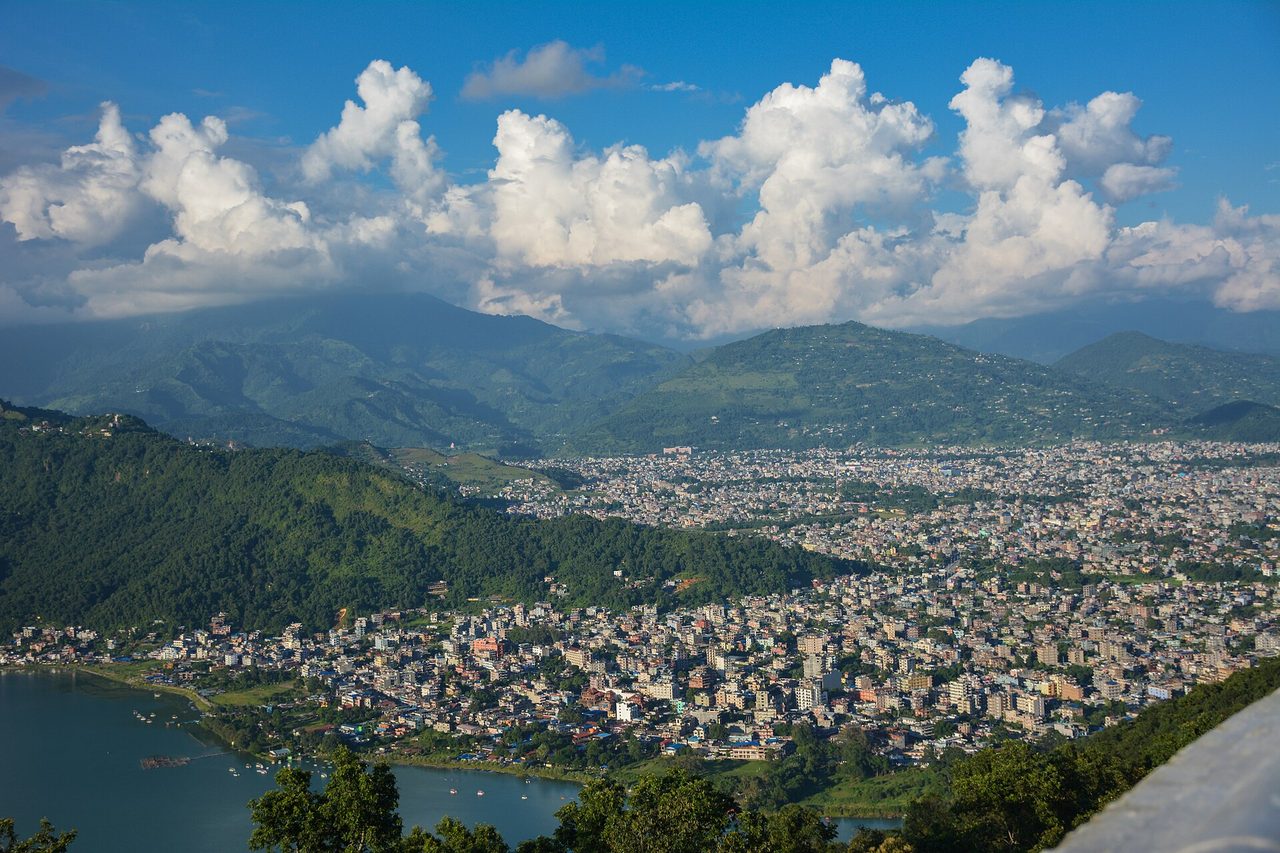
For an Annapurna trip, use Pokhara as the planning base, not as a promise that every trailhead or refill point is close to town. Ask the operator about the current route, lodge opening, refill arrangements and transport before paying for a specialist system. Our Nepal power-bank guide covers the separate problem of charging gaps; the six water devices here do not need charging.
The Nepal Tourism Board's TIMS page lists specific trekking routes requiring a licensed guide and an agency-issued TIMS card. Confirm your exact route and its conservation-area permit with your operator and the NTNC permit service; do not infer that one rule covers every short walk or every region. A gear purchase grants no access.
Spring and autumn are the usual starting points for trek planning, but they are not a guarantee against freezing, weather disruption or closures. Check the actual forecast and local advice close to departure. Ask about water access for your dates rather than relying on an old list of “safe drinking water stations.” We have not verified that any particular station will be operating on your trip.
The buying questions that come next
What does the more expensive purifier buy me?
In this comparison it buys a device with manufacturer-stated virus treatment, rather than only bacteria and protozoa filtration. The GRAYL format also gives you an integrated drinking bottle; the Guardian trades much more money and bulk for a pump with a different cartridge and maintenance design. None replaces clean handling or a backup. A familiar lower-cost filter plus correctly used disinfectant can be a sensible system if you will follow the whole routine.
Why not just buy tablets?
That may suit a supported trip, but read what the exact product treats, how much water each dose covers and how long it takes under your conditions. Sediment and some organisms complicate the choice. We have not ranked tablets as extra affiliate picks or assumed all chemical treatments are interchangeable. If a health condition affects which disinfectant you can use, ask a qualified travel-health clinician before the trip.
Is a UV pen a bad choice?
No. It is a different system with its own water-clarity, vessel, dosing and power requirements. This shortlist compares mechanical formats; it is not a claim that they are the only effective options. If you already use UV treatment competently, check the manufacturer's full routine and carry a suitable backup rather than buying another gadget solely because it appears here.
Does activated carbon make a filter a purifier?
No. The BeFree AC's carbon stage addresses taste and odour; it does not give that microfilter virus removal. Better-tasting water is not proof of complete microbial treatment, and neither carbon nor the word “purifier” is blanket permission to use water contaminated by fuel, industrial waste or agricultural chemicals.
Can I add electrolyte powder before treating water?
Do not improvise. Keep untreated source water separate from drink mixes. Check the exact bottle and cartridge instructions before putting anything other than water in the system; a compatible valve or clean-side allowance on one model is not permission for another. Plain treated water in a separate clean bottle is the simplest way to avoid mixing up these jobs.
Can I order these for delivery in Nepal?
The links open Amazon US. Check international delivery, import charges, warranty support and returns for your address; a US offer is not Nepal availability. Order early enough to check the model and kit contents and try the handling. Buy replacement supplies from a reliable source and inspect seals, packaging and the maker's instructions on arrival.
How this shortlist was checked
Checked 27 October 2026 using exact Amazon US listing identities and photos, manufacturer product specifications and care instructions, CDC water guidance and official Nepal travel and permit information. These are editorial judgments, not hands-on testing or a guarantee that a particular water source is safe. Device weights are labelled by scope; published capacity and flow figures are not our field measurements.
Pokhara's verified activity inventory contains day hikes, but none is needed to resolve this buying decision, so no tour block is included. Next scheduled review: 27 April 2027; material corrections can happen sooner. Research method · About the editor.