
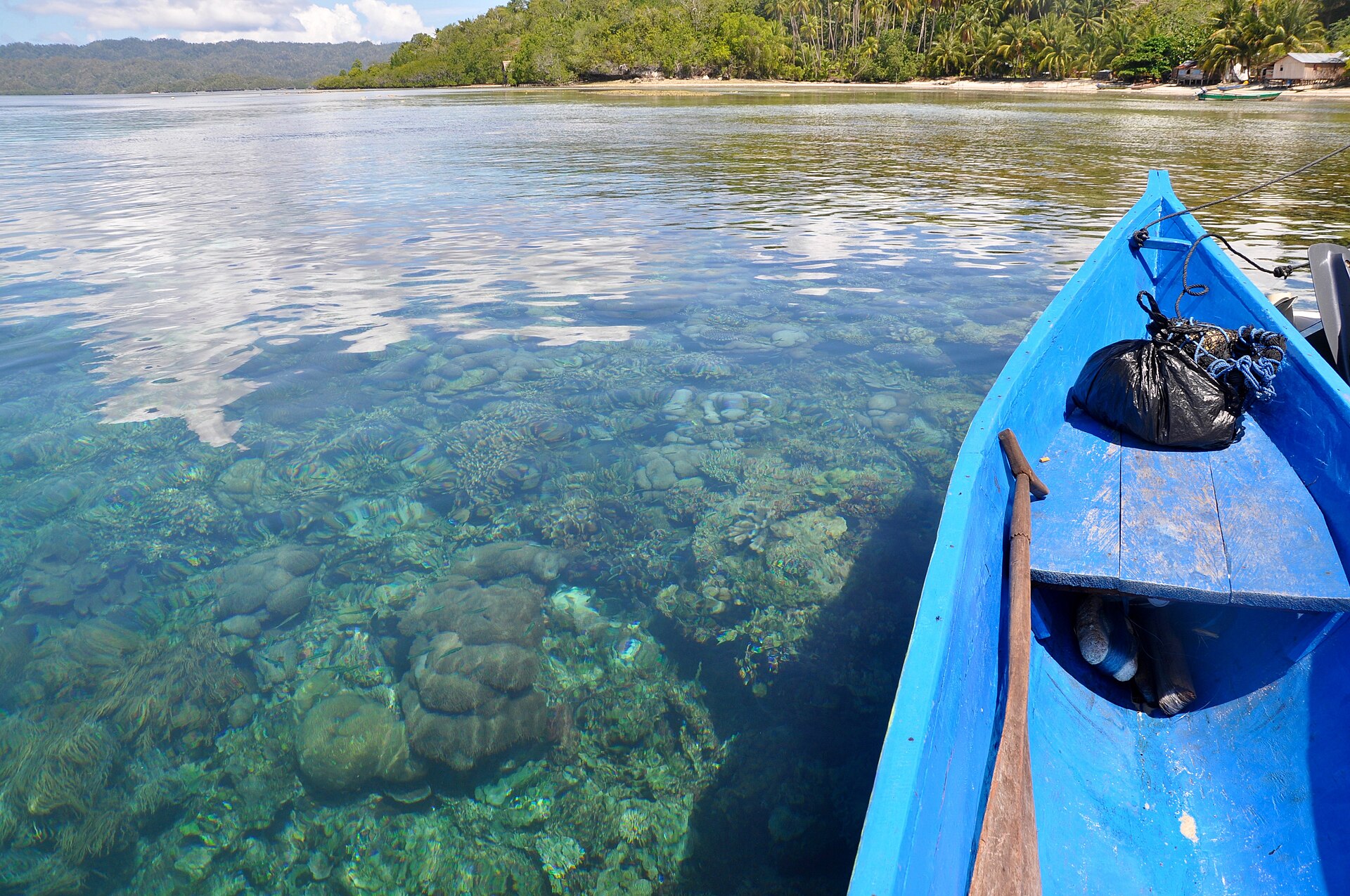
Book seven nights on one island in or near Dampier Strait, with diving or snorkeling arranged through the same reputable host. You will still reach famous reefs, but you also get a beach, a village and a quiet afternoon when the wind changes the plan. A liveaboard earns its price when you are an experienced diver whose priority is a specific multi-area route—not simply because it sounds like the “complete” Raja Ampat trip.
Land stay or liveaboard?
| Choose a land-based stay | Choose a liveaboard |
|---|---|
| This is your first visit, you want diving plus snorkeling or village time, and you value an afternoon off when your body asks for one. | You are comfortable with repeated boat dives, compact shared living and an itinerary that may change with weather and current. |
| You want your money to support a homestay or island-based team and you can be happy exploring one region well. | The published route reaches areas that one land base cannot reasonably combine, and those areas—not the boat itself—are the reason for the trip. |
| You are a snorkeler, mixed-experience couple or diver who wants conservative site matching. | Everyone in the party accepts the vessel's dive pace, cabin, safety system and limited opportunity to step away. |
Land does not mean easy shore access everywhere. Raja Ampat is an archipelago, and most days still begin in a boat. The difference is that each day comes home to the same bed. Around Arborek, Mansuar, Kri and Gam, a host can reach Dampier Strait sites without pretending that Misool is nearby.
A liveaboard is a moving base. That matters when the route genuinely links distant island groups. It also means your accommodation, transport, meals and dive operation are one system. If that system is a poor fit, there is no simple walk to another dive center.
Pick one Raja Ampat, not all of it
Dampier Strait is the right first region. The Marine Park Authority describes it as a major tourism area with exceptionally rich reefs, strong water movement and community stays at Arborek, Sawandarek, Yenbuba and other villages. Indonesia's tourism ministry also identifies Kabui Passage, Arborek, Sawandarek, Yenbuba and Friwen Wall among the region's notable in-water areas.
Misool is a separate commitment in the south. It can be brilliant, but it belongs in a dedicated resort transfer or a liveaboard itinerary with enough days to reach it without turning half the trip into repositioning. Wayag and the far north make the same demand. “North, central and south in seven nights” looks exciting on a map and exhausting in practice.
Make Sorong part of the plan
Fly into Sorong and sleep there unless your onward connection is genuinely protected by the operator. The official tourism route continues by ferry to Waisai, then by an arranged boat to the island stay. Published journey times are useful for scale, not as a promise: the ministry describes roughly two to three hours from Sorong to Waisai, while the last longboat leg varies by island and sea conditions.
Ask the host for the exact meeting point, the name and phone number of the person collecting you, baggage limits, what happens after a delayed flight, and whether the final transfer can operate after dark. Put your return night in Sorong too. Raja Ampat should not end with a small-boat sprint toward a same-day flight.
Questions that matter more than the cabin photo
- Which region and named sites are realistic? Ask for a route, not a collage. Weather and current may change individual sites, but the operator should explain the actual operating area.
- Are the current conservation fee and vessel permits included? Ask how the visitor payment is handled, which vessel permits apply and what proof you should keep available during the trip.
- How are divers matched? Certification alone does not describe comfort in current. Ask about guide ratios, negative entries, surface-marker-buoy expectations and a separate option for anyone who wants gentler water.
- Where are oxygen and the emergency plan? Marine Park guidance says dive boats should carry enough oxygen for the journey to further treatment. Ask for the plan in plain language.
- Can the day become a snorkel or rest day? A flexible land operator should be able to downshift. On a liveaboard, confirm what a non-diving guest can actually do.
A week that does not feel like a transfer
- Night one—Sorong: sleep, recover luggage, withdraw cash and keep the arrival simple.
- Day two—Waisai and island transfer: cross in daylight, settle in, test equipment and snorkel only if the host says the house water is suitable.
- Day three—an easier local day: use a sheltered reef or village jetty to learn the boat, entry and current procedures before chasing a marquee site.
- Days four and five—Dampier Strait: let the guide choose named sites that match the tide, weather and least experienced guest. Add one village stop without turning it into a photo raid.
- Day six—choose depth or breadth: experienced divers can take another two-dive day; snorkelers can combine Arborek, Kabui Bay or a similarly coherent route.
- Day seven—weather buffer: hold this open. Use it for the day wind canceled, a quiet paddle, a bird walk or doing very little.
- Day eight—return to Sorong: travel in daylight and sleep near the airport before flying onward.
If you scuba dive late in the trip, respect the no-fly interval given by your training agency and dive computer. The Sorong buffer is not automatically long enough; place the last dive according to your actual flight time.
October through April is the easier first trip
The Marine Park Authority calls October through April the calmer, drier planning window. It also notes that manta rays are present in northern Raja Ampat during this period, without promising a sighting. Our 2021–2025 Raja Ampat climate sample stays hot all year—typical daytime highs are around 28–30°C—and still records substantial tropical rainfall in every month. “Dry” is relative here.
July and August are a different proposition. The authority says southerly wind can bring rougher water, liveaboards may suspend Raja Ampat operations, and land operators may cancel dives. Some variation stretches from June into October. If those are your only dates, choose a flexible land stay, avoid a nonrefundable dream-site checklist and keep BMKG's marine forecast bookmarked for the actual travel window.
Do not use our historical offshore wave averages to choose a dive site. Dampier Strait's strong currents are driven through complex passages and change with tide and location. The local guide's briefing decides the entry.
Remote means the backup takes longer
Medical and emergency help is concentrated in Waisai and Sorong, not beside every reef. Buy specialist dive-accident insurance with realistic medical-evacuation coverage and save its emergency number offline. Treat that as part of the trip cost, not a checkout upsell.
- Ask to see the emergency action plan and oxygen setup before the first dive.
- Check your own rental gear before every dive, even with a polished operator.
- Request a different site if current, fitness or recent experience makes the proposed dive uncomfortable.
- Clean even small coral cuts promptly and keep them dry when possible; tropical wounds can deteriorate quickly.
- Carry water and drink before thirst becomes the warning. Heat and humidity do not disappear because you are in the sea.
- Do not touch or feed wildlife, collect shells or coral, or accept an itinerary that enters a no-go zone. Use moorings rather than anchoring on reef.
Wet boat, strong sun
Three personal pieces worth carrying east
Rent life-support equipment only from the operator you have vetted. These picks solve the smaller problems you can own yourself: sun and abrasion, a wet transfer, and a basic kit that stays usable around salt water.
Paid links. As an Amazon Associate I earn from qualifying purchases. We chose these exact models for this itinerary; Amazon does not determine the picks. Verify fit and pack personal medication separately.
SCUBAPRO UPF 50 long-sleeve rash guard
Why this pick: A fit-specific exposure layer from a major dive brand gives reliable sun and abrasion coverage without pretending to replace the operator's thermal advice.
Where it earns space: Repeated snorkels, sunny boat rides and underneath rental equipment that would otherwise rub bare skin.
See this pick on AmazonSea to Summit Big River dry bag
Why this pick: The abrasion-resistant roll-top construction is more appropriate for repeated small-boat handling than a delicate ultralight sack.
Where it earns space: The Waisai longboat, daily reef runs and every moment when passport, phone and dry clothes share a deck with spray.
See this pick on AmazonAdventure Medical Kits Ultralight/Watertight .7
Why this pick: A compact water-resistant kit from an established outdoor medical brand is a sensible base for minor personal care, without replacing the boat's oxygen or professional emergency kit.
Where it earns space: Small cuts, blisters and the island room after the operator's main supplies have gone back to the dive center. Add your own medication and antiseptic.
See this pick on AmazonThe final decision
For a first trip, stay on one island near Dampier Strait for a week. You will see less of the map and understand more of the place. The itinerary has room for a conservative first day, a changed forecast, a mixed-ability companion and an afternoon when another dive is not the best answer.
Book the liveaboard later when you can name what it unlocks: a dedicated Misool route, a longer north-to-central crossing, or a dive schedule that the entire group genuinely wants. A beautiful boat is not the reason. Reach, safety and a coherent route are.
Open the complete Raja Ampat destination guide for the monthly climate, mapped areas, marine history and travel budget. Before departure, use our guide to read wind, waves and tides without treating a model as clearance.