
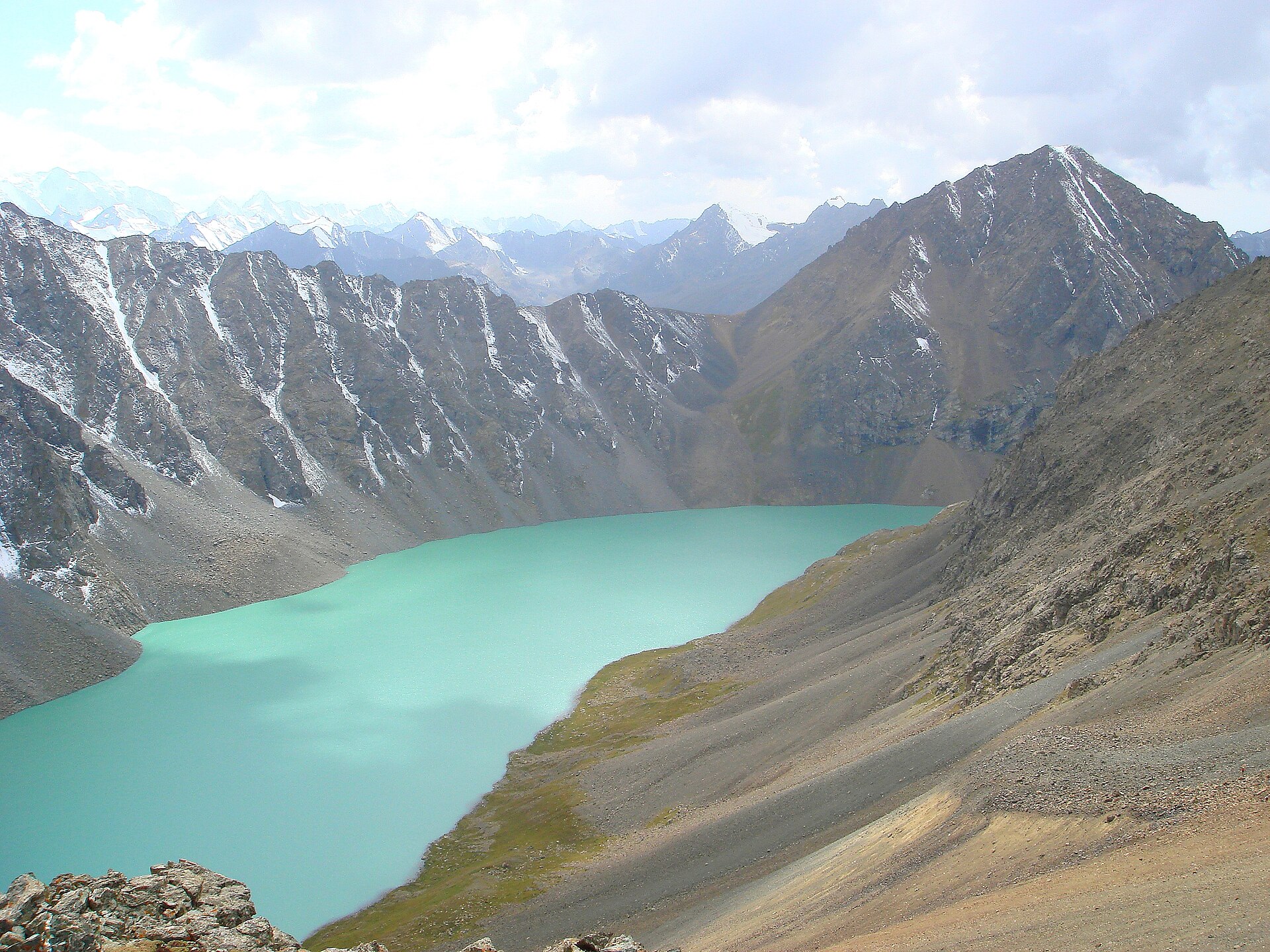
For a first Ala-Kul crossing, we would plan four trail days after two nights in Karakol. Walk up the Karakol Valley, sleep below the lake, give the lake its own afternoon, cross the pass early the next morning and finish through Altyn Arashan. Three days works, but only by joining the lake and pass into one demanding day.
The same trail becomes a different trip
| Plan | Who it suits | The honest tradeoff |
|---|---|---|
| Four days Three nights on the route | Most first-time visitors, self-supported trekkers and anyone who wants to camp near the lake without racing over the pass. | One more night of food, shelter and logistics. In return, the hardest terrain is split across two mornings. |
| Three days Two nights on the route | Fit, experienced and acclimatized hikers with a stable forecast, light packs and a reliable plan at both trailheads. | The lake and pass usually share one long day. There is less room for slow acclimatization, a late start or a weather hold. |
| Altyn Arashan only One or two nights | Travelers without the time, fitness or conditions for the pass who still want a mountain valley and hot-spring stay. | You do not see Ala-Kul. You do get a real trip instead of compressing a high pass into a deadline. |
A four-day itinerary does not make the 3,860-metre pass easy. It makes the approach more humane. The official three-day itinerary still labels the circuit strenuous, and its final day combines the pass, a 1,400-metre descent, Altyn Arashan and the ride back to Karakol. That is a workable guided product—not the pace we would automatically copy for an independent first attempt.
Start in Karakol Valley and finish with the hot springs
Walk the classic circuit from Karakol Valley toward Ala-Kul, then cross into Keldyke Valley and descend to Altyn Arashan. This direction lets the scenery build, puts the steep pass after at least two nights above town in the four-day plan, and saves the hot spring for tired legs rather than using it as a cheerful opening before the hard work.
The route is point to point. A map showing a neat loop can hide the transport problem at both ends. Arrange the first trailhead drop, your Altyn Arashan or Ak-Suu exit and the latest acceptable pickup before leaving Karakol. The road out of Altyn Arashan is rough 4WD terrain, not a clever shortcut for an ordinary rental car. If you plan to walk all the way to Ak-Suu, allow the full distance instead of assuming a vehicle will appear.
The four-day plan we would give a friend
Before the trail: sleep two nights in Karakol. Karakol sits around 1,750 metres. That is useful staging, but it is not complete acclimatization for sleeping near 3,500 metres. Use the first full day to buy fuel and food, confirm camps and transfers, check the mountain forecast, and take an easy walk rather than testing your legs with a giant day hike.
Day one: Karakol Valley to the Sirota area. Let the long valley approach do its job. Eat before you are hungry, refill before you are empty and arrive with daylight to spare. If your pack feels punishing here, it will not improve on the climb above camp.
Day two: climb to Ala-Kul and stop. This is where the four-day version earns itself. Reach the lake, set camp only in a suitable established area, eat, hydrate and watch how everyone responds to the sleeping altitude. The lake can be cold, exposed and below freezing even in midsummer. A sunset is a bonus; a dry sleeping system is the requirement.
Day three: cross Ala-Kul Pass early, then descend to Altyn Arashan. Leave enough morning for the steep, loose approach and a conservative weather decision. Trekking poles help on the scree, but they do not turn unstable ground into stairs. Descend carefully, take the hot spring if it is operating and hygienic, then eat the meal your body has been asking for since the pass.
Day four: walk or take the arranged 4WD toward Ak-Suu, then return to Karakol. This is the easy-looking day that can still break an onward connection. Keep the night in Karakol. A delayed vehicle, swollen crossing or slow group should cost an afternoon—not a flight.
Three days is a pace choice, not a badge
The common three-day version reaches Sirota on day one, crosses the lake and pass to Altyn Arashan on day two, then exits on day three. That middle day is the catch: sustained climbing, thinner air, steep scree and a long descent are stacked together. If one person slows, weather arrives early or a river crossing takes longer, the itinerary has little slack.
We would use three days only after recent time at altitude, with a guide or group capable of navigation and first aid, and with a forecast that supports an early pass crossing. Carrying a light pack helps. Starting unacclimatized from a low-altitude flight and calling yourself fit does not. Physical fitness does not predict who develops altitude illness.
If you have only three vacation days in Karakol, the answer may be not to cross Ala-Kul at all. Spend a night in Altyn Arashan, make a lower valley hike and keep a town day. The mountains will not notice that you chose the trip your calendar could hold.
Aim for July through early September, then verify the pass
Visit Kyrgyzstan lists June through September for its 2026 three-day tour, while detailed route operators and experienced trekking coverage narrow the most dependable window toward July to mid-September. We would treat July and August as the cleanest first-trip bet. June can still hold snow on the pass; by September, shorter days and fresh snow make an inflexible crossing less appealing.
- June: possible with current local confirmation, proper snow judgment and a guide when conditions demand it. Do not infer a clear pass from warm weather in Karakol.
- July: the easiest default for longer daylight and established seasonal services, with thunderstorms and cold nights still possible.
- August: another strong window. Karakol's 2021–2025 model averages were warm in town, but the pass remains a separate alpine forecast.
- Early September: often quieter and crisp, with less margin for a late start, early snow or a camp that has already reduced service.
Historical averages choose a month. The pass decision comes from the current mountain forecast, fresh trail reports, snow and river conditions, and what your group looks like that morning.
Altitude gets a vote, even when your legs feel good
The CDC treats any unacclimatized traveler sleeping at or above roughly 2,450 metres as at risk for altitude illness. Headache with nausea, dizziness, unusual fatigue or loss of appetite after an ascent is not something to “walk off” by climbing higher. Stop ascending. If symptoms worsen at rest, descend; confusion, loss of coordination, severe breathlessness or weakness demand urgent descent and medical help.
A four-day route helps by slowing the trip, but it does not replace sensible staging. Two nights in Karakol are a practical minimum for this itinerary, not a guarantee. Travelers with heart, lung or other relevant medical conditions should discuss the trip with a clinician familiar with high altitude before booking. Medication decisions belong there too—not in a packing list on a travel site.
Independent or guided? Decide by the weakest skill
Experienced trekkers do complete Ala-Kul independently. The route still has limited phone coverage, fast weather, loose terrain, river crossings and basic rescue capacity. Make the choice based on the group's weakest navigation, altitude, camping and judgment skills—not the strongest person's confidence.
For a guided trip, ask for the exact overnight stops, maximum group size, guide-to-guest ratio, emergency communication, first-aid qualification, meal plan, rental sleeping-bag temperature rating, bad-weather turnaround plan and both transfers in writing. Confirm whether “three days” means a vehicle removes part of the approach or exit. A low price can simply move food, equipment and transport back onto you.
For an independent trip, leave a route and overdue plan with someone in Karakol, carry offline navigation plus a backup, and know how your insurer handles trekking above 3,800 metres and evacuation in Kyrgyzstan. The national emergency number is 112, but a phone number is not a rescue plan when there is no signal.
Treat camps as help, not infrastructure you can blindly depend on
Seasonal yurts and guesthouses can reduce what you carry, especially around Altyn Arashan. Availability, meals, bedding and opening dates change. Reserve what can be reserved, carry enough food to absorb a missed meal, purify water and bring cash in small denominations. Do not arrive at the lake with neither a confirmed bed nor a shelter you know how to pitch in wind.
Pack out waste, camp on durable ground and keep distance from water sources. Horses and pack animals can simplify load carrying, but ask how weight is limited, how animals are handled and whether the route is suitable. The narrow pass is not a place to outsource every decision to an animal.
Three pieces, one mountain system
Gear that earns its weight on Ala-Kul
Your shelter, sleep system, footwear, navigation and emergency kit need to match the whole route. These three exact additions solve narrower problems: loose descent, sudden rain and warmth after you stop moving.
Paid links. As an Amazon Associate I earn from qualifying purchases. We chose these exact products for this plan; Amazon does not determine the picks. Check fit and availability before buying.
The exact listings and product images were checked on Amazon US on 29 August 2026. Buy or hire in Karakol when fit, baggage or a local repair matters more than owning another item.
LEKI Khumbu Lite trekking poles
Why this pick: Aluminum shafts and field-adjustable locks make sense where a pole is likely to be loaded hard, knocked against rock and changed repeatedly between valley and pass.
Where they earn space: The loose final climb and steeper descent from Ala-Kul Pass, when balance and controlled steps matter more than shaving a few grams.
See this pick on AmazonMarmot PreCip Eco waterproof shell
Why this pick: A packable waterproof with pit zips gives useful storm protection without becoming a sweat trap on the climb.
Where it earns space: Afternoon rain above the tree line and the windy wait at the pass. It belongs where you can reach it before the weather arrives, not at the bottom of a sealed pack.
See this pick on AmazonRab Xenair Alpine Light insulated jacket
Why this pick: Synthetic insulation is forgiving in a damp, stop-start mountain trip and layers cleanly under the shell.
Where it earns space: Dinner beside the lake, an early pass start and any long pause after your climbing heat disappears. It complements a correctly rated sleep system; it does not rescue an inadequate one.
See this pick on AmazonBook the itinerary you mean—not just “Ala-Kul”
We could not find a Viator trek that follows this Karakol crossing closely enough to recommend it here. For this route, a direct conversation with a Karakol operator is more useful than a vague booking button. Start with the four-day plan above and ask where their route differs. They should be able to name the camps, transport, elevation plan, group size, equipment and the point at which bad weather changes the day. “Everything included” is not enough of an answer.
Visit Kyrgyzstan currently publishes a defined 2026 three-day guided loop, while Destination Karakol publishes a four-day Terskey Ala-Too itinerary. Use those as concrete starting shapes. If an operator proposes a one-day lake trip, remember that Visit Karakol describes six to ten hours of walking after a two-hour 4WD approach and calls for good fitness and better altitude adaptation. One day is the compressed option—not the easy one.
The simple answer
Choose four days for your first Ala-Kul crossing. Choose three only when acclimatization, fitness, pack weight and weather all support one long lake-and-pass day. If your schedule cannot hold that honestly, stay in Altyn Arashan or hike a lower valley instead of turning a beautiful high route into a race.
Open the Karakol destination guide for monthly weather, the area map, town elevation, costs and transport context. Read how to use changing conditions without mistaking data for permission before committing to a pass day.